Article
Does fast charging wear out your EV battery?
Drivers who rely on public rapid chargers often hear that it shortens battery life. The research treats this as a question of how and how much, not yes or no.
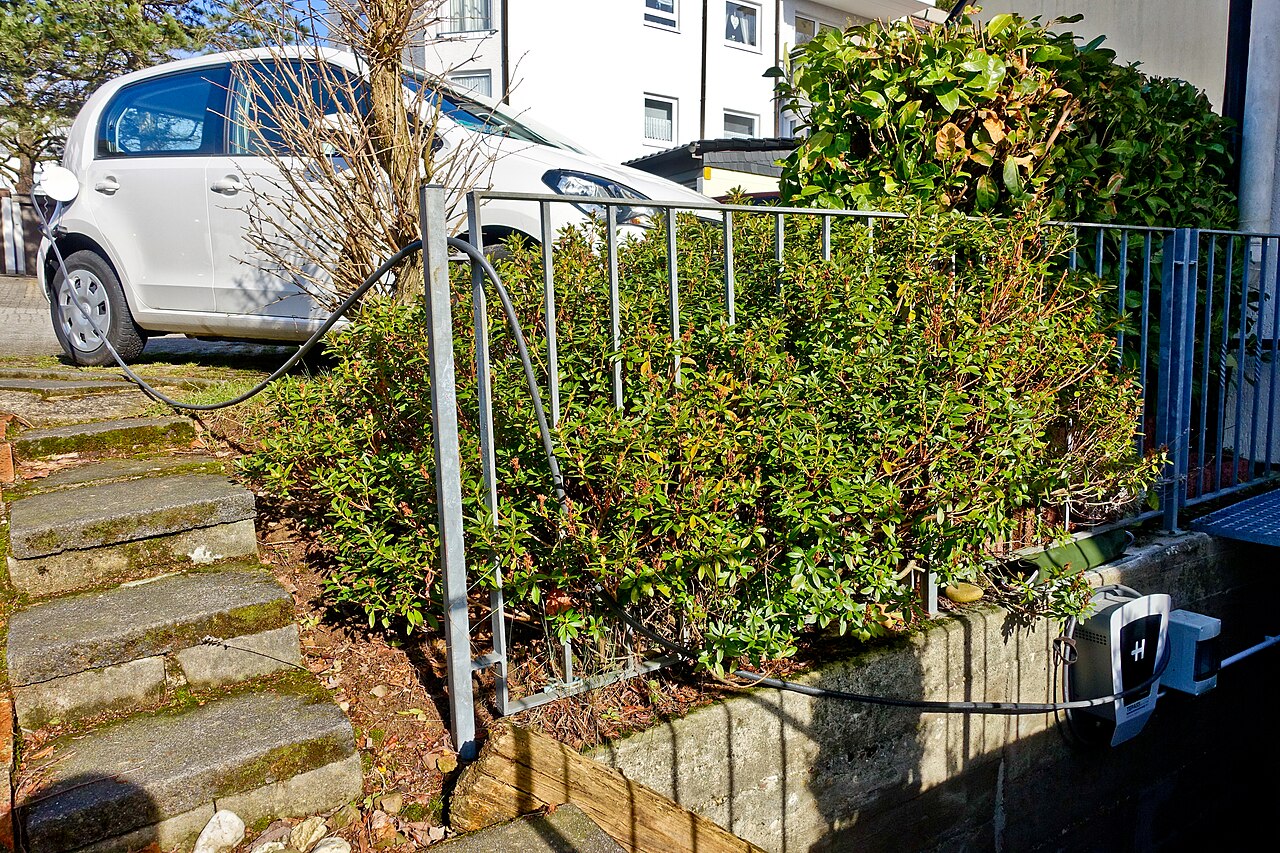

Why fast charging is studied at all
Charging a lithium-ion battery quickly generates more heat and puts more stress on the cells than charging it slowly. Both are known contributors to capacity loss over time. The open questions are how large the effect is in real use, and how much it depends on the car and the way it is charged.
What the research examines
- Mixed charging on a specific chemistry. A 2024 study examined battery degradation under mixed fast and slow charging on commercial NCA (nickel-cobalt-aluminium) cells [4]. Battery chemistries differ, so results for one should not be assumed for all.
- Strategy, not just frequency. A 2024 paper developed a one-time prediction of the capacity-fade curve under multiple fast-charging strategies [5]. Modelling several strategies treats how a battery is fast-charged as a variable in itself.
- Real-world conditions. A study used real-world mobility and environmental data to assess in-vehicle battery capacity fade [11], since how a car is driven and the climate it lives in affect ageing as well as charging.
- A mature market. A paper on battery-electric vehicle fast charging drew on evidence from the Norwegian market [12], one of Europe's longest-running large EV fleets.
- Cost. A study modelled battery replacement costs under realistic fast-charging behaviours [8], connecting the question to money rather than chemistry alone.
What actually varies the effect
| Factor | Why it matters |
|---|---|
| Battery chemistry | Degradation is studied per chemistry; NCA results are not universal |
| Charging strategy | Different fast-charging strategies produce different fade curves in modelling |
| Temperature and use | Real-world data capture conditions laboratory cycling does not |
| How the car manages charging | Battery management and thermal systems control charging rates and temperatures |
Practical takeaways
Modern EVs manage charging rates and battery temperature to limit stress, which is why rapid charging usually slows as the battery fills. If you can charge slowly at home for daily driving and keep rapid charging for longer trips, that is the gentler pattern. If rapid charging is your only option, the research does not suggest you are making a mistake, only that it is one factor among several in long-term battery health. For what it costs at the plug, see what public charging costs.
Common questions
Should I avoid rapid charging?
Is my car's battery chemistry NCA?
Does fast charging affect resale value?
Why does charging slow down near 80%?
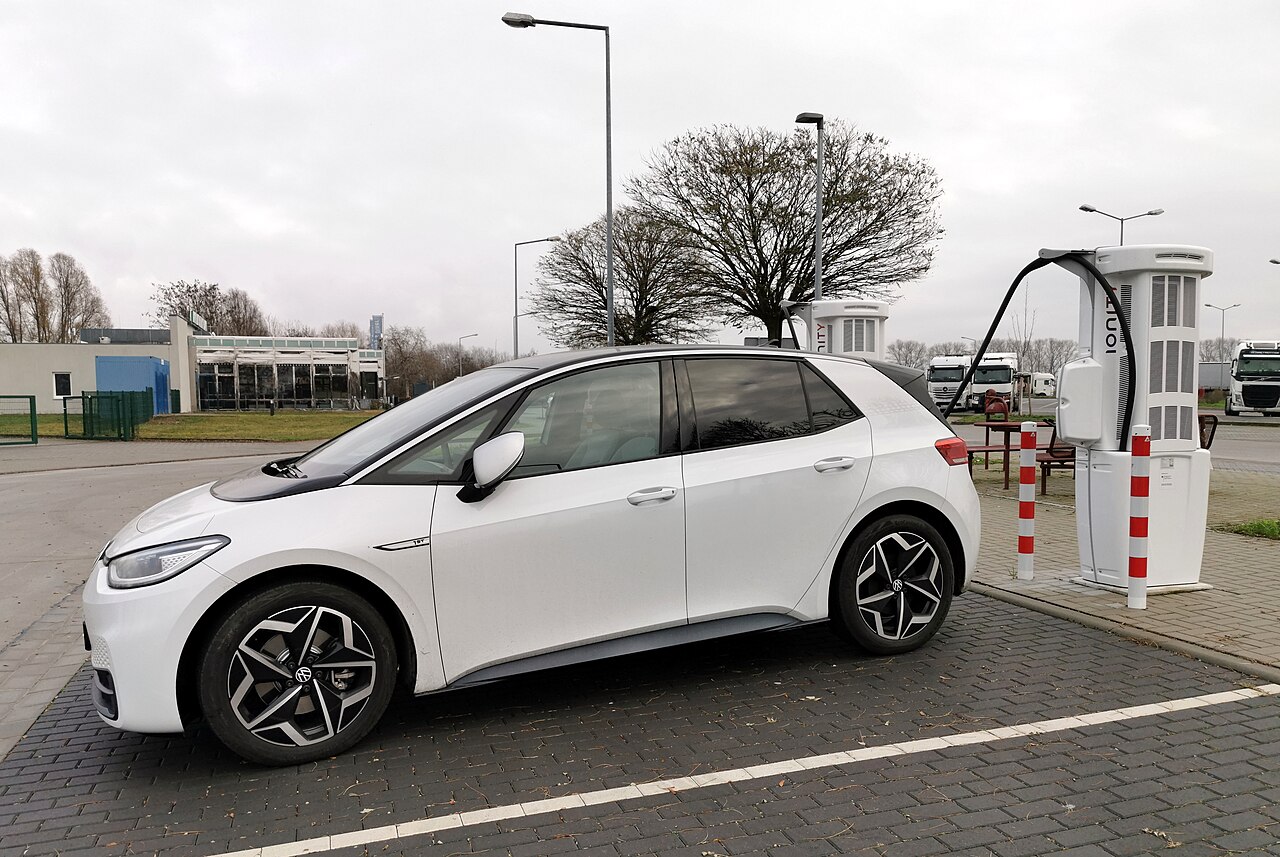

Related reading
- What does public charging actually cost?
- Which charging networks actually work?
- Are DC fast chargers noisy? What the research says
- Does the time of day change EV charging prices?
Referencat
Çdo citim më poshtë lidhet me regjistrin origjinal të rishikuar nga kolegët në PubMed ose përmes DOI. Asgjë këtu nuk është një zëvendësim për këshillën mjekësore.
-
Adaptive Polar Lights Optimizer for Smart Electric Vehicle Charging Under Price Uncertainty and Battery Degradation Benmoulai A, Kamel S, Jurado F · Machines · 2026 · Journal article DOI
-
Comparative Analysis of Slow Charging, Fast Charging, and Battery Swapping in Electric Truck Logistics: A Harbor Transport Case Bhatti H, Nåbo A, Eek M · World Electric Vehicle Journal · 2026 · Journal article DOI
-
Research on Battery Electric Vehicles’ DC Fast Charging Noise Emissions: Proposals to Reduce Environmental Noise Caused by Fast Charging Stations Clar-Garcia D, Campello-Vicente H, Fabra-Rodriguez M, et al. · World Electric Vehicle Journal · 2025 · Journal article DOI
-
Electric Vehicle Battery Degradation: Effects of Mixed Fast and Slow Charging on Commercial NCA Cells Morin H, Whitacre J · ECS Meeting Abstracts · 2024 · Journal article DOI
-
One-Time Prediction of Battery Capacity Fade Curve under Multiple Fast Charging Strategies Han X, Dai Z, Ren M, et al. · Batteries · 2024 · Journal article DOI
-
Optimal Capacity and Charging Scheduling of Battery Storage through Forecasting of Photovoltaic Power Production and Electric Vehicle Charging Demand with Deep Learning Models Aksan F, Suresh V, Janik P · Energies · 2024 · Journal article DOI
-
Optimal Sizing of a Battery-Supported Electric Vehicle Charging Hub with a Limited-Capacity Grid Connection Heath E, Wolbertus R, Heller R · World Electric Vehicle Journal · 2024 · Journal article DOI
-
Electric Vehicle Battery Replacement Costs Under Realistic Fast Charging Behaviors Morin H, Whitacre J, Michalek J · ECS Meeting Abstracts · 2023 · Journal article DOI
-
Battery Energy Storage System Optimal Sizing in a Battery Electric Vehicle Fast Charging Infrastructure Félix P, Roque L, Miranda I, et al. · U.Porto Journal of Engineering · 2023 · Journal article DOI
-
End-to-End Direct-Current-Based Extreme Fast Electric Vehicle Charging Infrastructure Using Lithium-Ion Battery Storage Powar V, Singh R · Batteries · 2023 · Journal article DOI
-
Real-World Mobility and Environmental Data for the Assessment of In-Vehicle Battery Capacity Fade Paffumi E, Martini G · World Electric Vehicle Journal · 2021 · Journal article DOI
-
Battery Electric Vehicle Fast Charging–Evidence from the Norwegian Market Figenbaum E · World Electric Vehicle Journal · 2020 · Journal article DOI
-
Stand-Alone Battery Thermal Management for Fast Charging of Electric Two Wheelers—Integrated Busbar Cooling Mayer B, Schier M, Friedrich H · World Electric Vehicle Journal · 2019 · Journal article DOI